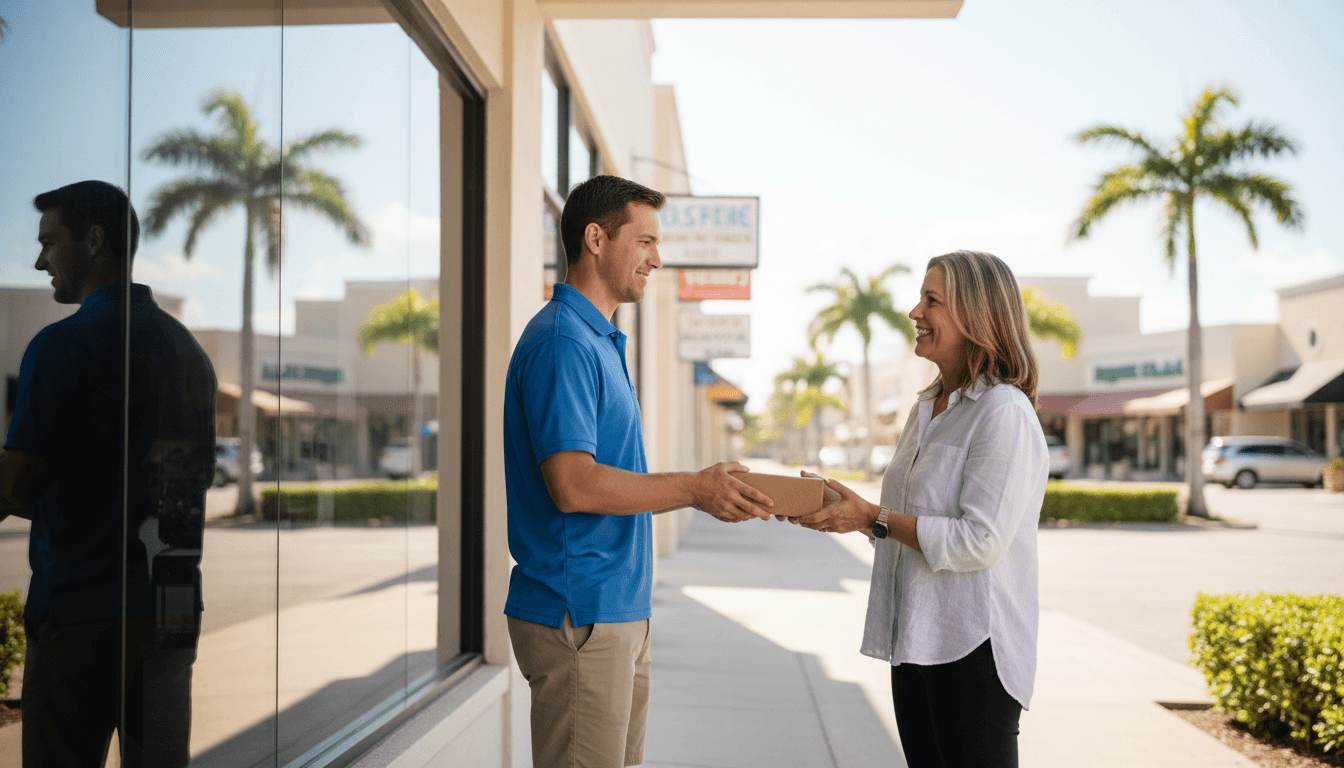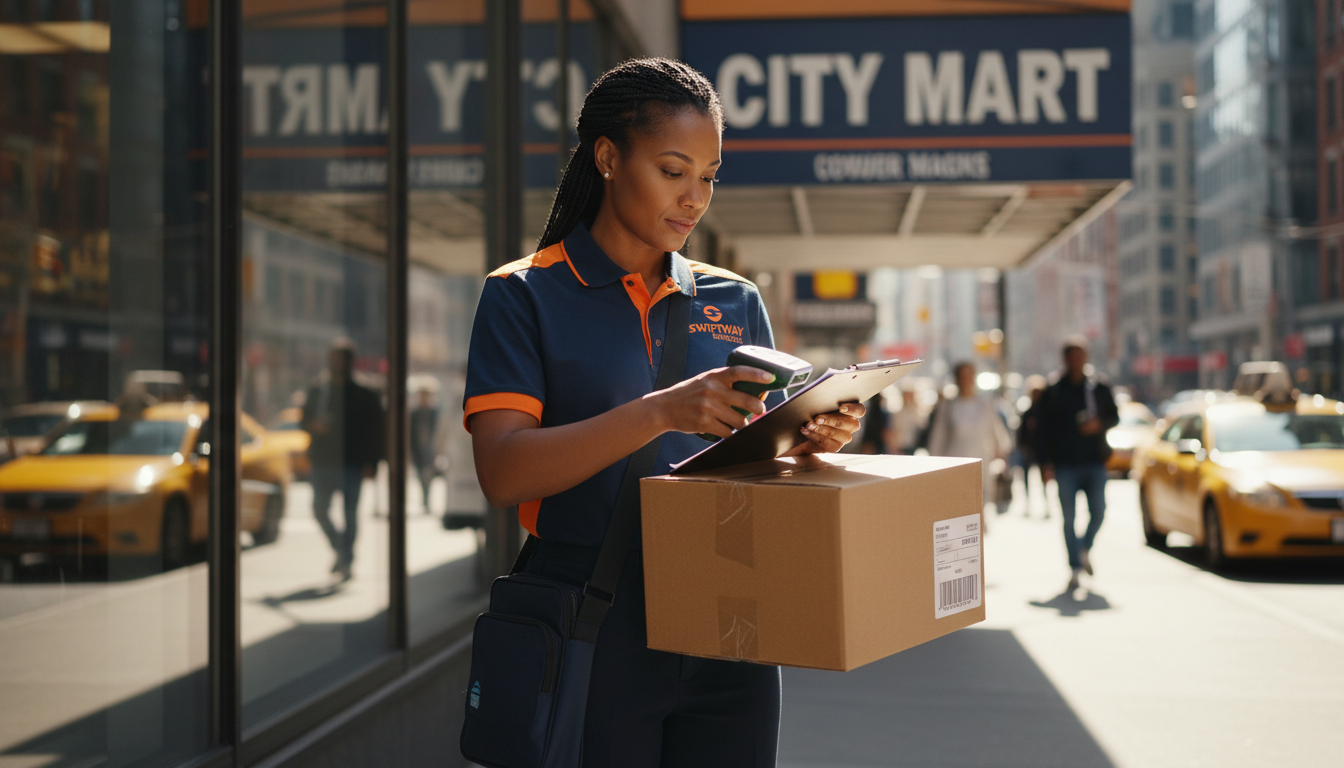
A failed delivery attempt usually occurs when last-mile logistics are disrupted by customer absence, incorrect address data, or unpredictable traffic conditions. Businesses can mitigate these issues by implementing dynamic route optimization and real-time GPS tracking to improve delivery visibility and communication. These tools help couriers manage delivery exceptions effectively, which reduces operating costs and improves the overall customer experience.
Few things disrupt a smooth supply chain quite like the phrase 'failed delivery attempt.' For Tampa businesses, this message represents more than just a minor inconvenience; it signals wasted fuel, lost time, and a potential breakdown in customer trust. In a fast paced commercial environment, these logistical hurdles directly impact your bottom line. Understanding the specific challenges of the Tampa Bay area, from unpredictable tropical weather to complex local infrastructure, is essential for maintaining operational efficiency. This guide examines the root causes of delivery exceptions and outlines practical strategies for prevention. You will learn how to navigate local environmental factors, implement effective recovery protocols, and leverage professional last mile partnerships to ensure your shipments reach their destination on the first try.
Understanding the Failed Delivery Attempt and Delivery Exceptions
To manage last-mile logistics effectively, you must distinguish between two commonly confused terms: a failed delivery attempt and a delivery exception. A failed delivery attempt occurs when a courier physically arrives at the destination but cannot complete the drop-off. This is often due to a required signature that cannot be obtained or a secured entry point that prevents access to the porch or loading dock. In contrast, a delivery exception is a broader umbrella term for any unforeseen event that delays a package's progress along its route.
Common questions regarding exception statuses often center on why a package is stalled. While national carriers might use this status for everything from a damaged barcode to a processing delay, the reality for reliable delivery services in Tampa is often more localized. An exception might be triggered by a sudden tropical downpour or an incorrectly formatted address for a new development in Water Street.
Unlike generic definitions found on national websites, local last-mile operations view these statuses as hurdles that require immediate resolution rather than just a tracking update. Success in the Tampa market relies on mastering proof of delivery and using local expertise to navigate these exceptions before they turn into permanent failures. Understanding these nuances helps businesses maintain transparent delivery pricing by reducing the hidden costs associated with re-routing and multiple attempts.
Common Causes for Failed Deliveries in the Tampa Bay Area

While definitions provide a framework, the practical hurdles leading to a failed delivery attempt in the Tampa Bay area are often rooted in the city's unique geography and rapid development. Inaccurate address data remains a leading cause; a single digit transposed in a zip code or a missing suite number can send a driver to the wrong side of the Selmon Extension. In areas experiencing rapid growth, GPS data occasionally lags behind new construction, making precise navigation difficult for couriers unfamiliar with the local grid.
Specific architectural layouts in Tampa further complicate the last mile. The high density, multi story apartment complexes in Westshore require couriers to navigate secure elevator banks and sprawling parking garages. Without specific drop off instructions or functional gate codes, these deliveries frequently stall. Similarly, the historic, narrow streets and one way corridors of Ybor City present parking challenges that can prevent a driver from safely reaching a storefront, especially during peak hours when loading zones are occupied.
Access issues are not limited to urban centers. Gated communities in New Tampa, Westchase, and South Tampa often require specific credentials or pre authorization at a guard shack. If a resident has not provided a gate code or alerted security, the courier is forced to turn around, regardless of their proximity to the front door. This necessitates mastering proof of delivery documentation so that businesses understand exactly where and why the bottleneck occurred.
Another frequent source of frustration is the 'business closed' status, even when a shop appears open to the public. This discrepancy typically occurs because of a mismatch between storefront hours and loading dock operations. While a retail space might stay open late, the receiving department or alleyway dock may stop accepting shipments mid afternoon. National carriers often default to a failed status if they cannot access the designated receiving area, regardless of whether the front door is unlocked. Overcoming these obstacles requires the type of reliable delivery services that prioritize local knowledge over rigid, high volume routes.
The Impact of Florida Weather and Infrastructure on Delivery Exceptions

Environmental and structural factors in Florida create a unique set of challenges that frequently trigger a delivery exception due to safety reasons. In Tampa, this status is most often the result of the volatile summer weather cycle. Intense afternoon thunderstorms can reduce visibility to near zero and turn residential streets in South Tampa into temporary waterways. When a driver encounters significant standing water on low lying streets near Bayshore or the surrounding neighborhoods, attempting the drop risks both the cargo and the vehicle. In these instances, the courier must prioritize safety, leading to a temporary halt in operations until the storm cell passes.
Infrastructure bottlenecks also play a critical role in delivery timing. The Tampa Bay area relies heavily on a few major arteries, specifically the Howard Frankland and Gandy bridges. A single accident on either span can paralyze traffic for miles, forcing drivers to miss tight delivery windows despite having left the hub on schedule. These infrastructure delays lead to exceptions that are entirely outside the control of the sender or the courier, but they still impact the customer experience.
Managing these events requires a level of agility that national carriers often struggle to provide. While a massive logistics firm might default to a rescheduled date the following morning, reliable delivery services focused on the local market monitor these conditions in real time. By understanding the flow of bridge traffic and the typical duration of a summer squall, local couriers can often resume their routes as soon as conditions clear. This proactive approach helps businesses maintain transparent delivery pricing by avoiding the administrative overhead of a permanent failed delivery attempt and the subsequent need for a full return to the warehouse.
How Tampa Businesses Can Prevent Failed Delivery Attempts
While you cannot control the weather or the Gandy Bridge traffic, you can control the data provided to your courier. Preventing a failed delivery attempt starts at the point of sale. Implementing address validation software at checkout is the first line of defense; these tools cross-reference entries against verified databases to catch transposed zip codes or misspelled street names before the order ever reaches the warehouse.
For businesses shipping into the heart of the city or dense residential pockets, granular detail is vital. When delivering to downtown high-rises or professional centers, a general street address is rarely enough. Require customers to provide a specific suite number, floor, or internal department name. In gated communities, a mandatory gate code field during the checkout process ensures the driver is not left idling at a keypad or turned away by security. Providing these specific instructions directly on the manifest allows the driver to navigate the final feet of the delivery without hesitation.
One of the most effective ways to ensure success is to provide a direct contact number for the recipient. Real-time communication between a Moment-Couriers driver and a customer can often save a delivery that would otherwise fail. If a driver is confused by a complex building layout or finds a loading dock blocked, a quick thirty-second phone call can resolve the issue immediately. This proactive data collection supports reliable delivery services and protects your bottom line by maintaining transparent delivery pricing. By minimizing the need for redelivery through better upfront information, businesses can ensure they are mastering proof of delivery and keeping their operational costs predictable.
Recovery Strategies: What Happens After a Failed Delivery
When a failed delivery attempt occurs, the recovery process begins with immediate data synchronization. The driver logs the specific reason for the failure, which automatically updates the tracking status and triggers a notification to both the business and the recipient. This transparency is the first step in mastering proof of delivery, as it provides a clear paper trail of the event and the specific hurdles encountered.
Following the initial notification, the recovery strategy diverges based on the courier's operational model. National carriers typically transport the package back to a centralized regional hub, often requiring the customer to wait until the next business day for a second attempt or travel to a distant pickup location. In contrast, reliable delivery services leveraging local independent contractors offer significantly more agility. Because our couriers are already embedded in specific Tampa neighborhoods, they can often circle back to a location in Seminole Heights or Hyde Park later the same afternoon if the initial obstacle, such as a blocked driveway or a briefly absent recipient, has been cleared.
If a same-day redelivery is not feasible, the system prompts for a scheduled second attempt. This window is chosen based on the data gathered during the first attempt, such as verified loading dock hours or specific gate access instructions. By prioritizing these flexible recovery tactics, businesses maintain transparent delivery pricing and avoid the compounded costs associated with returning items to the original warehouse unnecessarily.
Improving the Delivery Error Rate with Professional Last Mile Partners
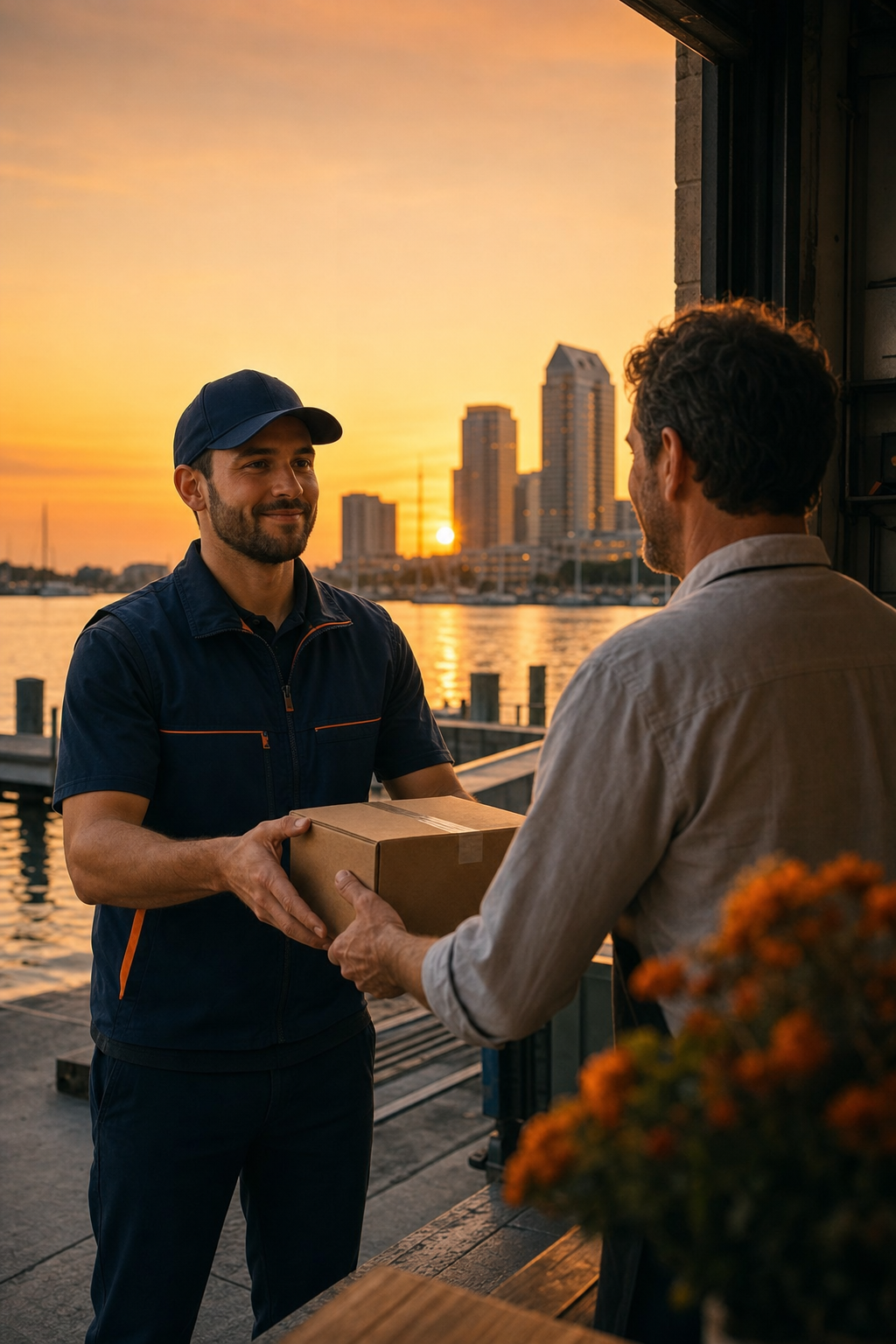
The delivery error rate is a critical KPI that tracks the percentage of shipments failing to reach the recipient on the first try. In the logistics industry, the last mile often accounts for more than half of the total shipping cost; therefore, every unsuccessful drop significantly erodes profit margins. When the error rate climbs, businesses face a compounding cycle of increased fuel expenses, additional labor hours, and the potential for customer churn due to missed expectations.
National carriers operate on a model of extreme volume where individual package success is often secondary to overall route density. In contrast, a local partner like Moment-Couriers shifts this focus toward individual accountability. Our model utilizes independent contractors who operate as local experts. These drivers are not merely following a digital map; they are navigating familiar territory in South Tampa, Brandon, or Temple Terrace with a professional motivation to complete every drop successfully. Because their personal performance metrics and contract standing depend on successful completions, they are far less likely to record a failed delivery attempt when a practical solution is available.
This localized expertise is what drives down error rates in ways that enterprise software cannot. While national platforms use geocoding to estimate locations, they lack the intuition of a driver who knows which professional buildings in the Westshore District have restrictive loading dock hours or how to navigate the specific parking hurdles in Ybor City. By partnering with reliable delivery services that prioritize this level of local navigation, businesses can stabilize their transparent delivery pricing and focus on scaling their operations rather than managing logistics recoveries. Ultimately, reducing errors is about mastering proof of delivery through a workforce that is personally invested in the success of the Tampa business community.