
Last mile delivery cost typically ranges from $10 per urban package to $50 for rural locations, often accounting for more than half of total shipping expenses. These costs are driven by labor, fuel, and warehouse management; however, businesses can manage budgets by optimizing routes and increasing delivery density.
For many business owners across the Tampa Bay area, the final leg of the logistics chain feels less like a smooth transition and more like a significant drain on the bottom line. Whether you are navigating the congestion near Channelside or coordinating drops in suburban Brandon, the costs associated with getting a product from a warehouse to a customer door can consume over half of your total shipping budget. These expenses are rarely linear, as they are often inflated by local traffic patterns, fuel fluctuations, and labor inefficiencies. Understanding these variables is essential for maintaining healthy margins in a competitive Florida market. In this guide, we will break down the specific factors influencing delivery rates in Hillsborough County, establish realistic per-mile benchmarks, and provide a practical framework to help you decide when to scale your internal team or outsource to a specialized local partner.
Understanding the Last Mile Delivery Cost in Florida
Last mile delivery represents the final, most complex leg of the supply chain. While global logistics networks manage the long distance haul across state lines, the last mile refers specifically to the movement of goods from local distribution hubs in areas like Ybor City or Westshore directly to the customer's doorstep. This final trip is often the most inefficient part of the process because it involves individual stops rather than bulk transport.
According to industry benchmarks, the last mile delivery cost accounts for approximately 53 percent of a shipment's total expense. For Tampa businesses, this metric is particularly critical due to the geographic layout of Hillsborough County. Navigating the constant congestion on I-4 and I-275, or managing the time lost during peak traffic on the Howard Frankland Bridge, directly impacts the bottom line.
Every mile driven within the Tampa Bay area carries a higher price tag than a mile driven on an open highway. Factors such as idling in traffic, frequent stopping, and the labor required for residential navigation turn this short distance into a significant financial burden. Understanding this cost structure is the first step toward optimizing your last-mile delivery services and protecting your margins against rising fuel and labor variables.
TL;DR: What is the average last mile delivery cost?
To get straight to the numbers, the last mile delivery cost for a single package varies significantly based on density and distance. In high density urban zones like Downtown Tampa, Hyde Park, or the Channel District, businesses should expect to pay between 10 and 15 dollars per delivery. These routes benefit from shorter travel times between stops, which helps keep the per package rate manageable for local operations.
Moving into less dense areas increases the price floor. Deliveries extending into deeper Hillsborough County or rural Pasco County often reach 50 dollars per package due to the time and fuel required for long residential trips. For businesses looking at a courier pricing model based on distance rather than a flat rate, local rates typically fall between 1.50 and 3.00 dollars per mile. Higher volume contracts usually lean toward the lower end of this range, while on demand or specialized deliveries command a premium to account for the immediate allocation of resources and driver time.
Why Last Mile Logistics is So Expensive for Local Businesses
The primary reason the last mile delivery cost remains high for local operations is the heavy concentration of variable expenses that cannot be easily offset by scale. Unlike long-haul logistics where a driver may travel hundreds of miles at a steady speed, last-mile delivery requires constant stopping, starting, and navigating complex residential or commercial layouts.
Labor represents the single largest variable expense for any courier operation. In Florida, driver wages have seen consistent growth; the time spent finding parking in the Westshore Business District or navigating gated communities in New Tampa adds up quickly. Fuel follows closely, typically accounting for roughly 30 percent of total operational costs. In urban environments, frequent idling during peak traffic hours significantly lowers fuel efficiency, meaning you pay more for every mile traveled.
Local businesses face a specific challenge known as a lack of delivery density. Enterprise giants can drop fifty packages in a single ZIP code, drastically lowering the cost per stop. For a local Tampa business, deliveries are often miles apart. This creates dead miles, which refers to the distance a driver travels without a package or between stops that are not geographically optimized. When stops are far apart, the fixed costs of the vehicle and the hourly rate of the driver are distributed over fewer deliveries, making each individual trip more expensive. Managing these inefficiencies requires a deep understanding of courier pricing and how routing impacts the bottom line.
The Tampa Factor: Local Variables Affecting Your Delivery Budget
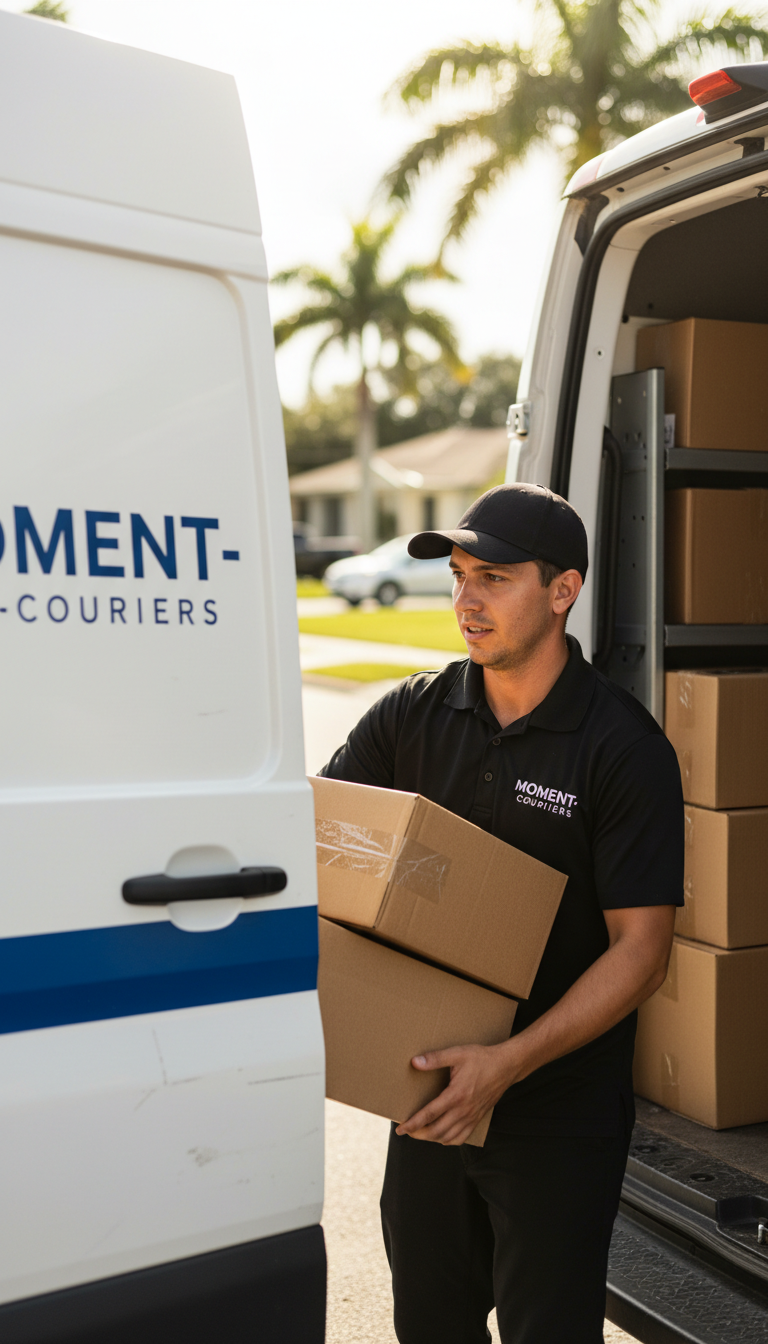
National logistics benchmarks provide a baseline, but the actual last mile delivery cost in the Tampa Bay area is dictated by local geography. One of the most significant variables is the bridge factor. While the Howard Frankland and Gandy bridges do not currently charge tolls, the extreme congestion during peak hours transforms a ten mile trip into a sixty minute labor expense. For businesses using the Selmon Expressway to bypass city traffic, daily toll expenses quickly become a fixed line item that generic national models overlook.
Seasonal volatility also plays a major role in Florida. During Spring Break or when the Lightning are playing at Amalie Arena, downtown traffic density spikes, reducing the number of stops a driver can complete in a single shift. This lack of predictability requires a courier pricing strategy that accounts for time, not just mileage. Furthermore, fuel prices in the Tampa St. Petersburg metro area fluctuate based on supply chain movements at Port Tampa Bay, often diverging from national averages. For a local operation, these specific regional hurdles mean that a standard per mile rate might not cover the hidden costs of bridge delays or stadium related gridlock. Navigating these variables requires last-mile delivery services that understand the unique rhythm of Hillsborough County.
How Much Should a Courier Charge Per Mile?
Professional independent contractors and local providers in the Tampa market typically utilize a specific calculation to determine the last mile delivery cost for a single trip. The standard formula consists of a base flag-drop fee plus a mileage rate. The base fee, often ranging from 5 to 15 dollars, covers the administrative overhead and the time required for the driver to arrive at the initial pickup location. This fee ensures that even short-distance trips remain viable for the contractor.
Once the package is in transit, the mileage rate is applied. In Hillsborough County, this rate generally falls between 1.50 and 3.00 dollars per mile. For a delivery moving from a warehouse in Ybor City to a storefront in Brandon, a business might see a breakdown similar to the table below:
Component | Typical Range | Purpose |
|---|---|---|
Base Flag-Drop | $5.00 – $15.00 | Covers pickup time and dispatch overhead |
Per Mile Rate | $1.50 – $3.00 | Covers fuel, vehicle wear, and transit labor |
Fuel Surcharge | 5% – 15% | Adjusts for Tampa-specific fuel price volatility |
While seeking the lowest courier pricing is a natural instinct, the cheapest per-mile rate often correlates with a higher rate of failed deliveries. A failed attempt at a high-rise office in the Westshore District or a gated community in New Tampa can effectively double your shipment expense. Investing in reliable last-mile delivery services ensures that the driver has the local knowledge and communication tools to complete the drop-off correctly on the first attempt, protecting your profit margins from the hidden drain of re-delivery fees.
Calculating Delivery Costs Without Enterprise Software

Quantifying your last mile delivery cost does not require a five-figure investment in enterprise software. For many growing businesses in Hillsborough County, a manual audit using a standard spreadsheet provides sufficient clarity to identify where margins are slipping. This process begins by tracking four primary data points for every delivery shift: total driver hours, fuel expenditures, vehicle mileage, and the number of completed stops.
To calculate your Cost Per Mile, add the total labor cost for the shift to the fuel consumed and a maintenance allocation, typically around 0.15 dollars per mile for light commercial vehicles. Divide this total by the miles driven. To calculate Cost Per Stop, divide the total daily route cost by the number of successful deliveries. This secondary metric is often more revealing for Tampa operations because it highlights the financial impact of time lost in Westshore traffic or delays at large apartment complexes.
Data Point | Calculation Method | Significance |
|---|---|---|
Total Daily Cost | (Hourly Wage x Hours) + Fuel + Maintenance | Represents the total capital deployed for one day. |
Cost Per Mile | Total Daily Cost / Total Miles Driven | Measures fuel and vehicle efficiency across routes. |
Cost Per Stop | Total Daily Cost / Successful Drops | Measures route density and driver productivity. |
Once these baseline figures are established, you can use free tools like Google Maps to improve efficiency manually. Instead of dispatching drivers to addresses as orders arrive, input all daily destinations into a single map to visualize clusters. Use the "add stop" feature to sequence the route in a continuous loop, minimizing the dead miles between Brandon and the Downtown core. This manual sequencing, paired with a weekly review of your courier pricing data, allows you to adjust your delivery fees based on real-world expenses rather than estimates. Tracking these metrics ensures that your last-mile delivery services remain a sustainable part of your business model as you scale.
How to Reduce Last Mile Delivery Costs in Hillsborough County
Optimizing your local logistics requires moving beyond general efficiencies to target the specific friction points of the Tampa landscape. One of the most effective methods for lowering your last mile delivery cost is zone skipping. Instead of dispatching drivers to Brandon, Riverview, and Plant City daily, a business can aggregate all orders for a specific region onto a single day. This strategy artificially increases delivery density, ensuring that the distance between stops is minimized and fuel consumption remains low.
Reducing failed deliveries is the next priority, especially when navigating the Westshore District’s high-rise offices or the gated residential complexes common in New Tampa. A single failed attempt can double the labor and fuel investment for a single package. Implementing precise customer communication, such as automated arrival windows and specific gate code requests at the point of sale, prevents the driver from idling at a security kiosk or returning to the hub with an undelivered item.
Strategy | Implementation Tip | Expected Impact |
|---|---|---|
Zone Skipping | Group all Brandon orders for Tuesday and Thursday delivery cycles. | Higher density; lower per-mile labor spend. |
Precision Communication | Require gate codes and suite numbers for Westshore and New Tampa orders. | Reduced re-delivery fees; fewer dead miles. |
Route Sequencing | Use local traffic patterns to avoid I-275 during morning peak hours. | Lower fuel costs from reduced idling. |
By tightening these operational gaps, businesses can stabilize their courier pricing and ensure their last-mile delivery services contribute to growth rather than draining resources. For those reaching the limits of manual optimization, you can contact Moment-Couriers to discuss professional route management.
Outsourcing vs. In-House: When to Hire a Tampa Courier Service

Deciding to maintain an internal delivery fleet often hinges on the volume of stops versus the administrative burden. While a single company vehicle might seem manageable initially, the fully burdened cost includes high commercial insurance premiums in Florida, rapid vehicle depreciation from idling in Tampa humidity, and the time spent managing driver call-outs. These hidden overheads fluctuate month to month; this makes it difficult to maintain a stable last mile delivery cost during periods of rapid growth.
Expense Type | In-House Management | Outsourced Partner |
|---|---|---|
Liability | High (Direct Insurance Risk) | Transferred to Provider |
Maintenance | Variable (Unexpected Repairs) | Fixed within Service Rate |
Scaling | Difficult (Leasing/Hiring Cycles) | Immediate (On-Demand Capacity) |
Focus | Split (Operations & Logistics) | Core Business Growth |
Transitioning to professional last-mile delivery services converts these unpredictable variables into a transparent, per-delivery line item. By utilizing an established provider, you eliminate the need to invest in expensive routing technology or manage the logistical complexities of navigating the Westshore Business District. This shift allows you to scale your distribution across Hillsborough County without increasing your fixed headcount or capital expenditure. To evaluate how a specialized partner can stabilize your courier pricing and improve reliability, you can contact Moment-Couriers for a detailed assessment of your current route efficiency.
Managing last mile costs in Tampa requires a careful balance between route efficiency and customer expectations. While setting a clear budget is a vital first step, maintaining a fleet can become quite complex as your business grows. If you want expert help streamlining your local distribution, partnering with a dedicated provider might be the right next step. You can view our full range of delivery services to find a solution that fits your specific needs. Let us help you navigate these costs effectively.